Faults · 5 min read
Fuse box keeps tripping? What to check before you ring anyone
A board that keeps tripping is doing its job: it has found a fault. Here are the safe checks you can do yourself, and the signs that mean you should stop and call someone.
 Harry RadfordNAPIT approved electrician, Halewood
Why does my fuse box keep tripping?
Your fuse box keeps tripping because something on the circuit is faulty or asking for too much power, and the switch is cutting it off to protect you. The most common causes are a faulty appliance, water getting into a socket or light, too many things running on one circuit, or a fault in the wiring itself. The trip switch is a safety device. It is telling you there is a problem, so the answer is to find the cause, not to keep flicking it back on.
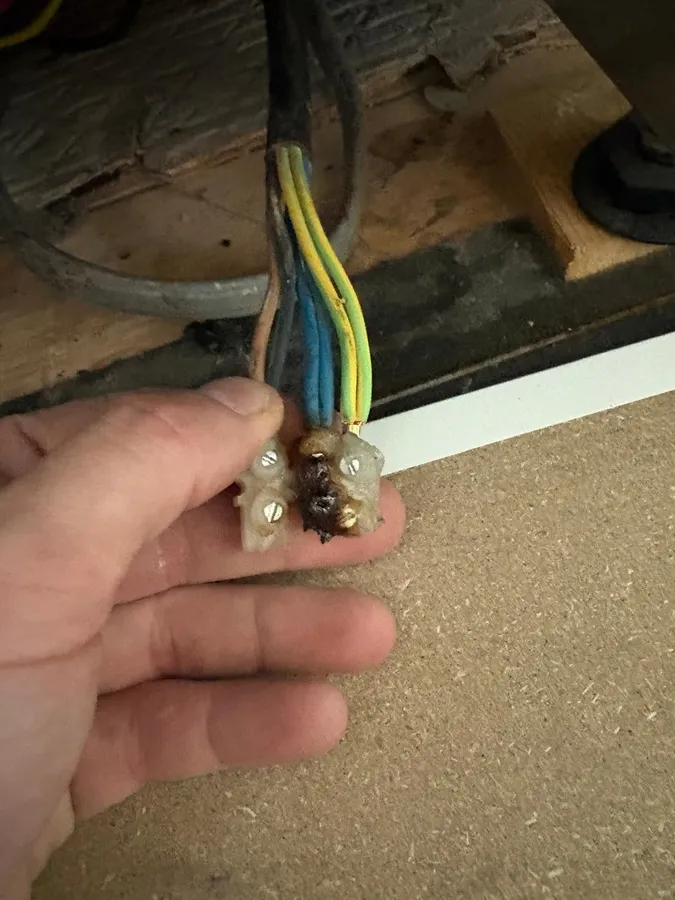
If you can smell burning, see scorch marks or hear buzzing or crackling from the board, a socket or a switch, stop. Turn the main switch off if it is safe to reach, do not reset anything, and call an electrician.
First, look at which switch has tripped
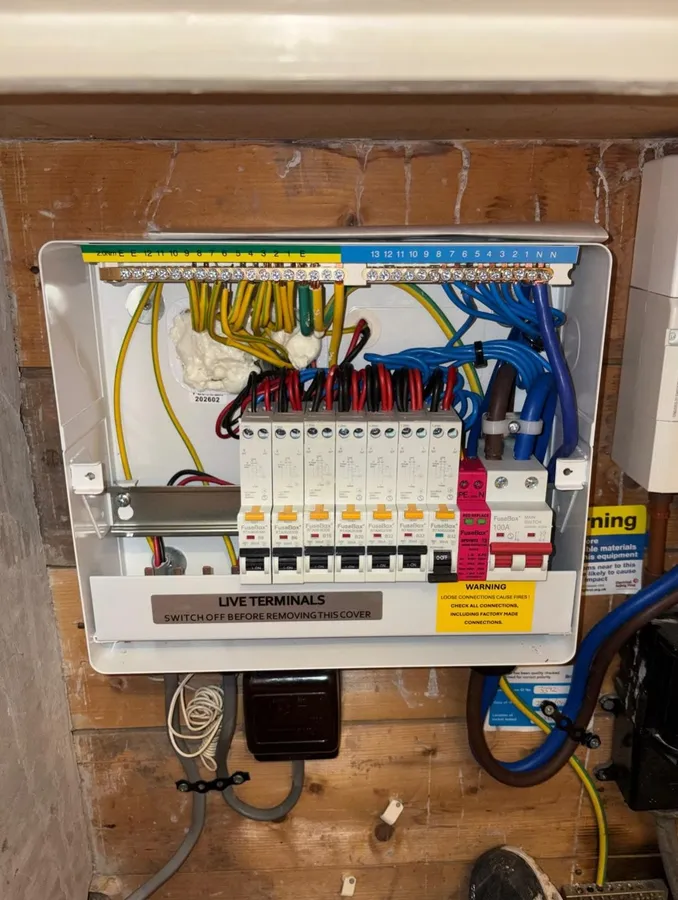
Open the cover on your board and look for the switch that is in the down or off position. What it is tells you a lot.
| What tripped | What it usually means |
|---|---|
| One small switch (MCB) for one circuit | Too much load on that circuit, or a short circuit on it. |
| A wider switch marked RCD, or with a T or test button | Electricity leaking to earth somewhere. Often an appliance or moisture. |
| An RCBO (a single switch with a test button) | Either of the above, but only on that one circuit. |
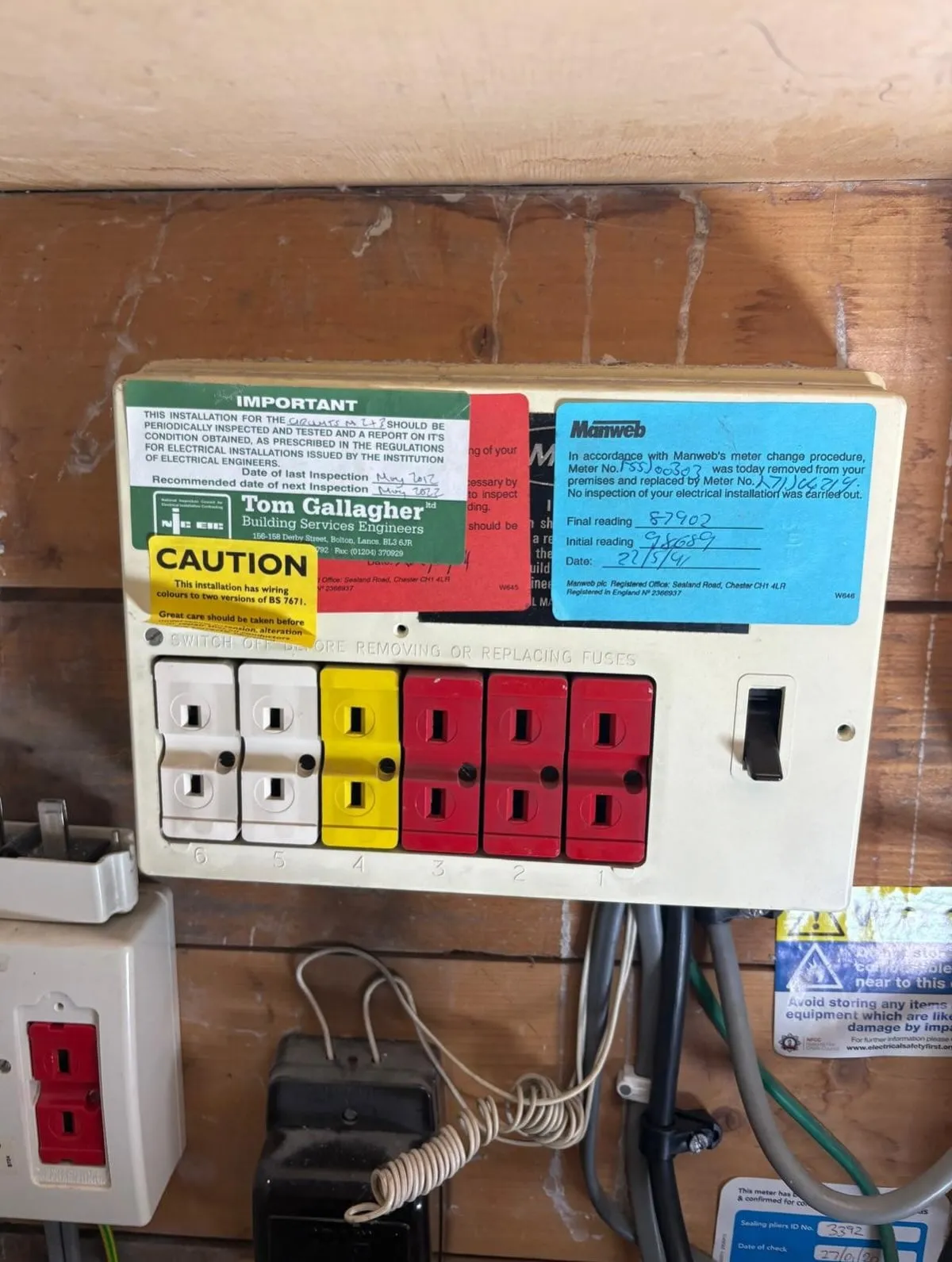
| Old rewireable fuse has blown | Same as an MCB tripping, on an older board. Worth having the board looked at. |
RCD keeps tripping: check your appliances
A faulty appliance is the most common reason an RCD keeps tripping. Kettles, washing machines, dishwashers, tumble dryers, immersion heaters, outdoor lights and old extension leads are the usual ones. Here is a safe way to find it:
- Unplug everything on the circuit that tripped. Switch off any fused spurs for fixed things like the cooker hood or boiler if you know which they are.
- Reset the switch.
- If it stays on, plug things back in one at a time, waiting a minute between each.
- When it trips again, the last thing you plugged in is the likely culprit. Leave it unplugged and get it checked or replaced.
If it trips straight away with everything unplugged, the problem is in the fixed wiring or a fitting, not an appliance. That is a job for an electrician.
Other common causes: water and overloading
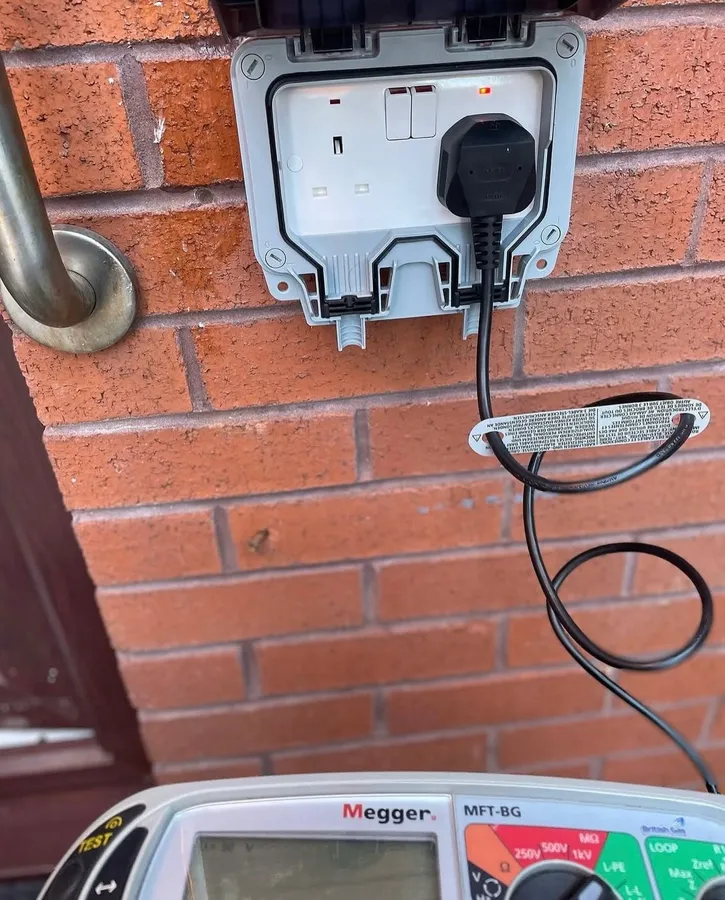
Water. Rain getting into an outside socket or light, a leak above a ceiling light, or condensation in a bathroom fan can all trip an RCD. If the tripping happens in wet weather, or after a shower, that is a strong clue. Do not use the fitting until it has been checked.
Too much on one circuit. If one circuit trips when you run the kettle, toaster, microwave and washing machine at the same time, the circuit may simply be overloaded. Spreading the load can help short term. If it happens often, the circuit may need splitting or the kitchen may need its own circuits.
Nuisance tripping. On boards with one RCD covering lots of circuits, small leakages from many appliances add up and trip the lot. This is a known weakness of older layouts. Fitting a board with RCBOs, where each circuit has its own protection, usually stops it and means one fault no longer takes out half the house.
When to stop resetting and call an electrician
Resetting once to see what happens is fine. Resetting again and again is not. Each trip is a fault being cut off, and forcing it back on can damage wiring or hide a real danger. Call an electrician if:
- It trips again with everything unplugged.
- It will not reset at all.
- There is a burning smell, scorching, or a hot socket, switch or board.
- The board still has old rewireable fuses, or has no RCD.
- It keeps happening and you cannot link it to one appliance.
Fault finding in Liverpool with Harry
Harry Radford is a NAPIT approved electrician based in Halewood. He tests the circuit that is tripping, finds the fault and tells you what it is before he fixes anything. Fault finding is charged as a call-out: £80 for the first hour on weekdays (8am to 5pm) and £50 an hour after that. If the board itself is the problem, he will explain your options, which may include a new fuse board (from £600, fixed once he has seen it).
Ring or WhatsApp Harry on 07788 861536 with what tripped and when. A photo of the board helps.
Harry RadfordNAPIT approved electrician based in Halewood, working across Liverpool and Merseyside.